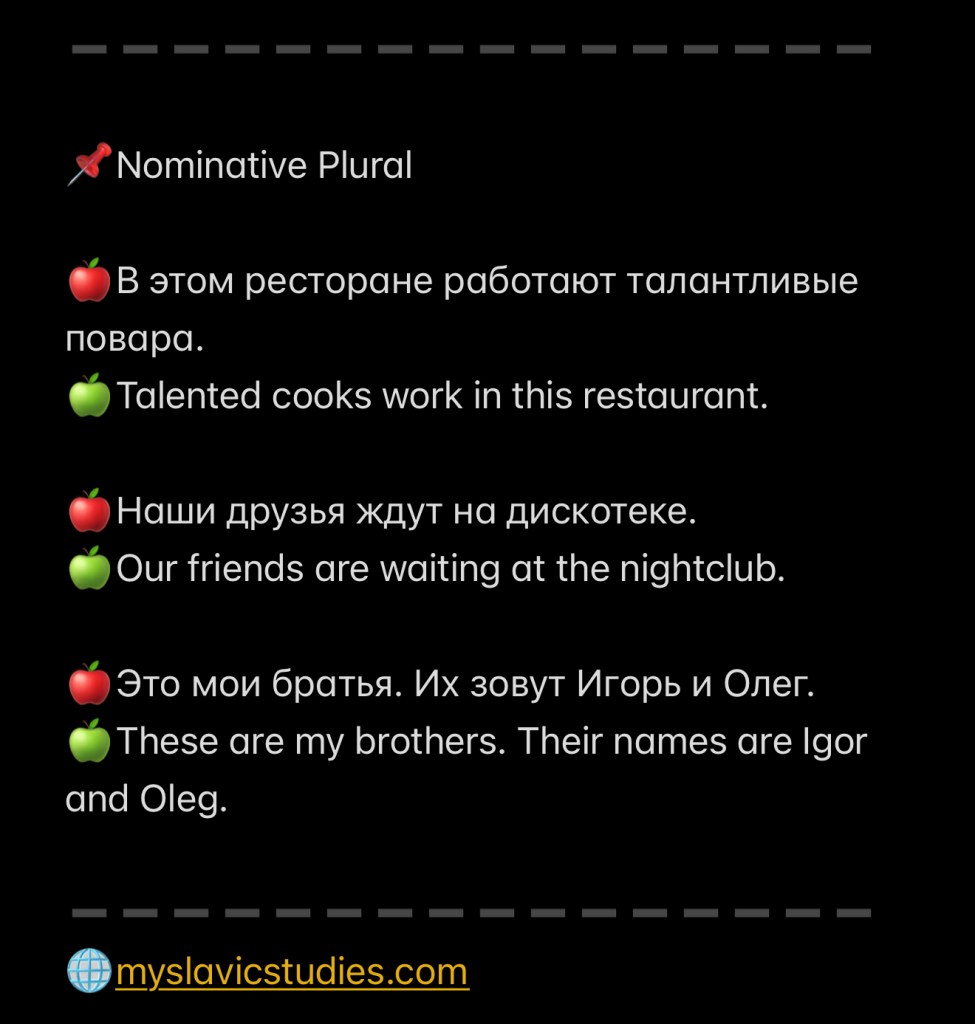
We’ve learned how to form the plural in Russian. It’s more complex than in English, however if you follow the rules and add the proper endings, you’re as good as gold.
Unfortunately, there are many exceptions when it comes to forming the nominative plural, also known as the base plural.
These irregularities must be memorized since following rules won’t help. A lot of these nouns are ones that are often used in everyday life, so you won’t be able to ignore them. But, on the upside, because they have great frequency, you’ll be able to master them quickly.
I’ve tried my best to group them according to their ending.
There are certain nouns ending in…
| –я [stressed or unstressed] |
| Singular | Plural |
|---|---|
| брат [brother] | братья [brothers] |
| сын [son] | сыновья [sons] |
| друг [friend] | друзья [friends] |
| стул [chair] | стулья [chairs] |
| лист [leaf] | листья [leaves] |
| учитель [teacher] | учителя [teachers] |
| лагерь [camp] | лагеря [camps] |
| дерево [tree] | деревья [trees] |
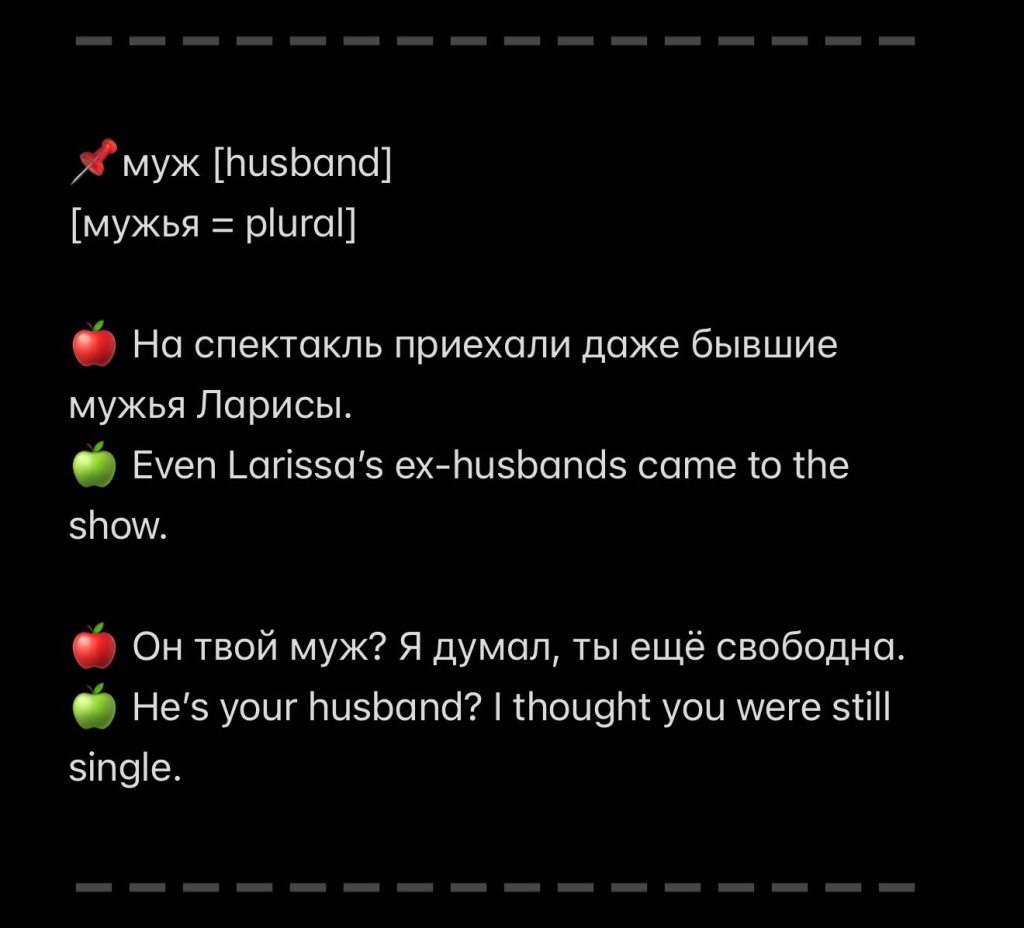
| муж [husband] | мужья [husbands] |
Are you finding my blog useful?
Like and share the posts and subscribe to my blog please.
By doing so, you help it thrive and succeed.

| –a [stressed] |
| дом [house] | дома [houses] |
| трактор [tractor] | трактора [tractors] |
| профессор [professor] | профессора [professors] |
| паспорт [passport] | паспорта [passports] |
| директор [director] | директора [directors] |
| город [city] | города [cities] |
| поезд [train] | поезда [trains] |
| лес [forest] | леса [forests] |
| глаз [eye] | глаза [eyes] |
| берег [shore] | берега [shores] |
| доктор [doctor] | доктора [doctors] |
| вечер [evening] | вечера [evenings] |
| адрес [address] | адреса [addresses] |
| остров [island] | острова [islands] |
| номер [number] | номера [numbers] |
| цвет [color] | цвета [colors] |
| мех [fur] | меха [furs] |
| луг [meadow] | луга [meadows] |
| голос [voice] | голоса [voices] |
| повар [cook] | повара [cooks] |
| господин [sir] | господа [sirs] |
| колокол [bell] | колокола [bells] |
| счёт [account] | счета [accounts] |
| рукав [sleeve] | рукава [sleeves] |
| ворох [heap] | вороха [heaps] |
| Nouns ending in –мя [of which there are only 10] have an irregular plural ending. |
| время [time] | времена [times] |
| имя [name] | имена [names] |
| The nouns мать and дочь share a peculiar plural. |
| мать [mother] | матери [mothers] |
| дочь [daughter] | дочери [daughters] |
| Just as in English, Russian has irregular plurals for person and child. |
| человек [person] | люди [people] |
| ребёнок [child] | дети [children] |
| And some plurals are just weird! |
| цветок [flower] | цветы [flowers] |
| яблоко [apple] | яблоки [apples] |
| колено [knee] | колени [knees] |
| ухо [ear] | уши [ears] |
| плечо [shoulder] | плечи [shoulders] |
| небо [sky] | небеса [skies] |
| озеро [lake] | озёра [lakes] |
| жена [wife] | жёны [wives] |
| весна [spring] | вёсны [springs] |
| сестра [sister] | сёстры [sisters] |
| сосед [neighbor] | соседи [neighbors] |
| муравей [ant] | муравьи [ants] |
| ремесло [oar] | ремёсла [oars] |
| колесо [wheel] | колёса [wheel] |
| гнездо [nest] | гнёзда [nests] |
| Baby animals share a common pattern in the plural. They all end in –ёнок. |
| котёнок [kitten] | котята [kittens] |
| цыплёнок [chick] | цыплята [chicks] |
| Certain nationalities ending in –нин have a weird plural. |
| датчанин [male Dane] | датчане [Danes] |
| россиянин [male Russian] | россияне [Russians] |
And there are even more irregular plurals, but they get rarer and rarer, and seeing as this is already quite an exhaustive post, that’ll be it for now.
| It’s important to know these irregular plurals, because often if they are irregular in the nominative plural, they will also be irregular in other cases where the plural form is used such as accusative plural, genitive plural, etc. |
| Last Edited: 12/27/2025. |
 My Slavic Studies